Recently, I stumbled upon a Washington Post article discussing the statistics of police-involved shootings and fatalities over recent years. The article referenced a comprehensive dataset, which I managed to download before encountering the paywall. This dataset documented all fatal police shootings spanning roughly a decade. While the data extended into 2024, I’ve excluded those entries from my analysis since the year is still ongoing.
The dataset contained several key parameters:
- Date
- Name
- Age
- Gender
- Armed
- Race
- City
- State
- Flee
- Body Camera
- Signs of Mental Illness
- Police Departments Involved
The dataset revealed a staggering 9893 cases – an alarmingly high number of individuals who lost their lives without due process, regardless of their alleged criminal activities. Each number represents a person denied their constitutional right to a fair trial.
After examining the data quality and addressing missing values across various columns, I had to exclude approximately 400 entries, leaving me with 9509 cases for analysis. This sample size remains statistically significant enough to draw meaningful conclusions about the patterns present in the overall dataset.
Demographics of the Victims
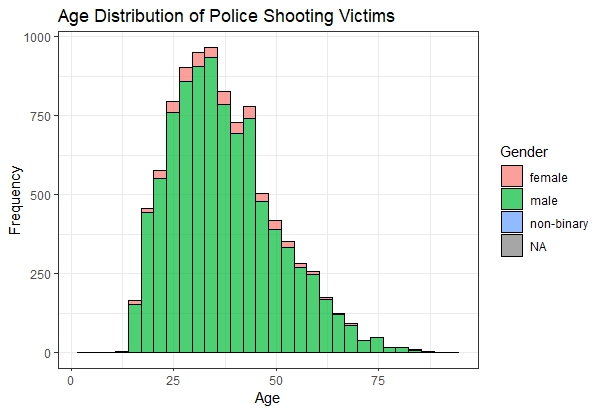
My initial analysis focused on examining the age distribution of police shooting victims. The data showed a concentration in the 25-60 age range, which aligns with general crime statistics. This age group typically shows higher involvement in criminal activities or presence in high-crime areas.
Further investigation revealed interesting patterns when analyzing racial demographics.
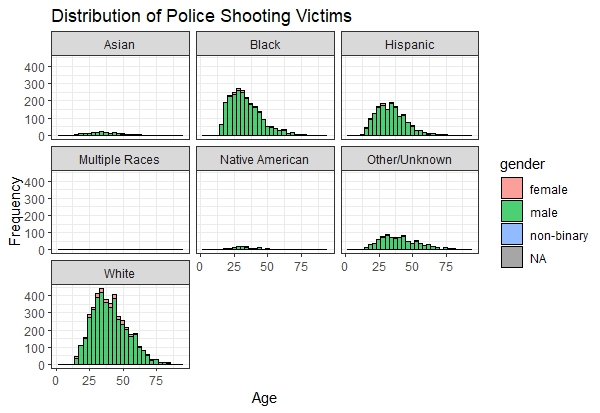
The data initially appears to reflect expected proportions, given that White Americans comprise roughly 65-70% of the total population, explaining their higher representation among police shooting victims. However, a deeper analysis reveals concerning trends: Black and Hispanic victims show a notably skewed age distribution toward younger ages, with victims predominantly in their late teens and early twenties. In contrast, White victims follow a more normal distribution pattern, typically falling in their late twenties or thirties. This raises questions about whether social changes over the past few decades have led to increased police interactions with younger people of color. While this observation warrants further investigation, additional data would be needed to draw definitive conclusions about these demographic disparities.
While raw numbers provide one perspective, examining the percentage of population affected by police interactions offers deeper insights. I analyzed the Washington Post dataset in conjunction with US demographic data (sourced from here) to calculate these proportional impacts.
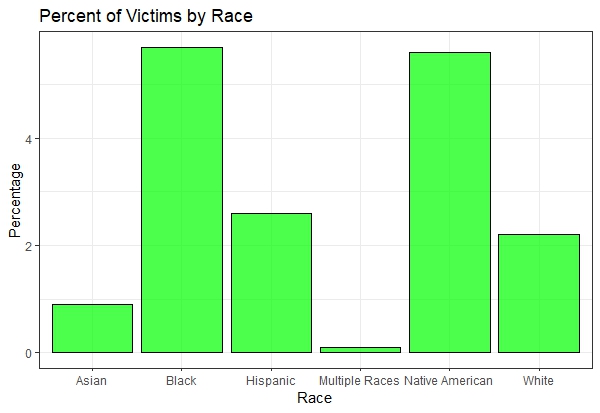
In my analysis, I excluded the “Unknown” race category due to the discrepancy between census data accuracy and the Washington Post dataset’s limitations, likely stemming from incomplete police documentation. It’s worth noting that approximately 10% of victims in the original dataset had unspecified racial classifications.
The proportional analysis reveals striking disparities: Native American and Black populations face double the likelihood of fatal police encounters compared to white populations. Hispanic individuals experience similar rates of fatal police interactions as white populations, while Asian Americans show half the likelihood of such encounters. The “Multiple Races” category contained insufficient data points for meaningful analysis, possibly due to inconsistent reporting in police records.
One potential explanation for Asian Americans’ lower representation in police shooting statistics could be their generally reduced frequency of police interactions. While Asian Americans are widely recognized as one of America’s most successful immigrant groups, their family structure, as documented in Pew Research findings, might be a contributing factor. However, this remains a preliminary hypothesis requiring further investigation for definitive conclusions.
Mental Health of the Victims
My analysis then shifted to examining the mental health status of victims.
The findings are concerning: approximately 2,000 victims over the past decade exhibited signs of mental illness. This suggests that redirecting resources toward mental health professionals and social workers might be more effective than relying solely on law enforcement.
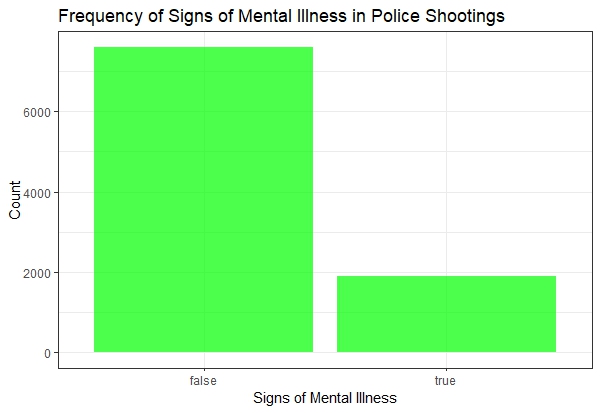
Breaking down mental health data by race reveals another pattern: white victims of police shootings are roughly three times more likely to be classified as not mentally ill, while Black, Hispanic, and Native American victims show a five-to-one ratio between those classified as not mentally ill versus those showing signs of mental illness.
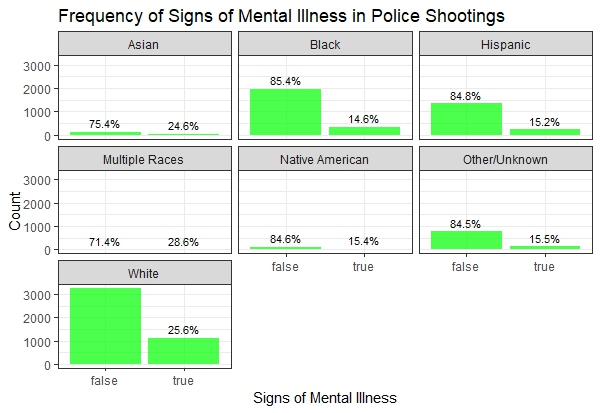
It’s crucial to note that these mental health classifications are based on behavioral signs observed during police encounters, rather than professional diagnoses or established medical histories.
Circumstantial Trends
I focused on two key situational factors:
- Whether the victims were trying to flee?
- Whether the victims were armed?
Were the Victims trying to Flee?
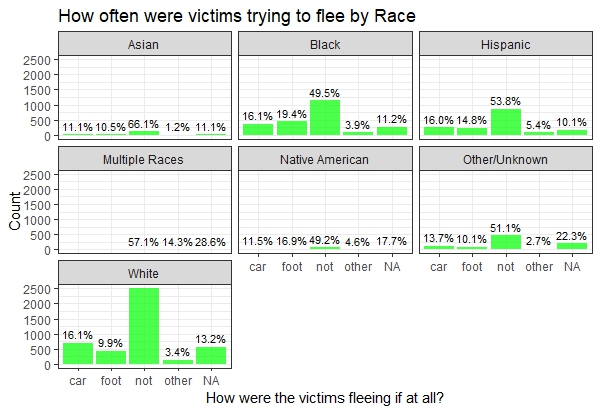
Analysis across racial demographics indicates that approximately half of the victims were not attempting to escape during their encounters with law enforcement. This suggests that many victims were likely complying with police directives, though definitive conclusions cannot be drawn solely from this dataset.
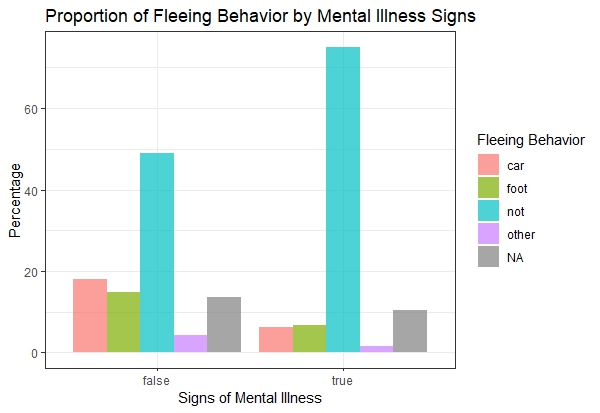
When examining the intersection of mental health status and escape attempts, a notable pattern emerges: the majority of mentally ill victims were not attempting to flee. This observation raises significant concerns about the necessity of lethal force in situations where alternative intervention methods might have been viable.
The behavioral patterns of victims, when analyzed across different racial groups, demonstrate remarkable consistency. Where sufficient data exists, the distribution of victim responses appears uniform across racial categories, suggesting that behavioral responses to police encounters transcend racial boundaries.
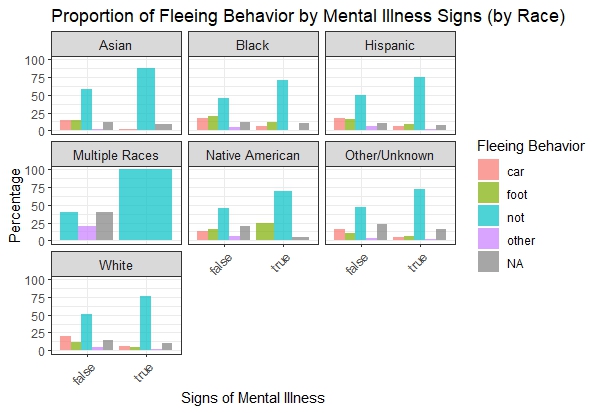
This consistency prompts a critical inquiry: In cases where victims showed no intention to escape, what circumstances prevented successful arrests without resorting to lethal force?
Were the Victims armed?
Analysis of weapon possession among victims reveals firearms as the predominant type of armament. However, a distinct pattern emerges among mentally ill victims within Native American and Hispanic communities, where knife possession was notably more prevalent.
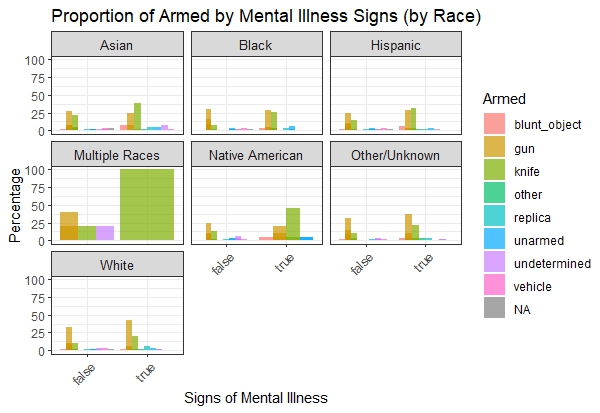
This finding underscores the potential benefits of enhanced firearm regulation in protecting law enforcement officers – a measure that has faced consistent opposition from the National Rifle Association.
How have Police Shootings trended over time?
The past decade has witnessed a concerning upward trajectory in police-involved shootings and resultant fatalities. While a ten-year span might seem relatively brief in historical context, the data reveals a disturbing average of approximately 1,000 victims annually.
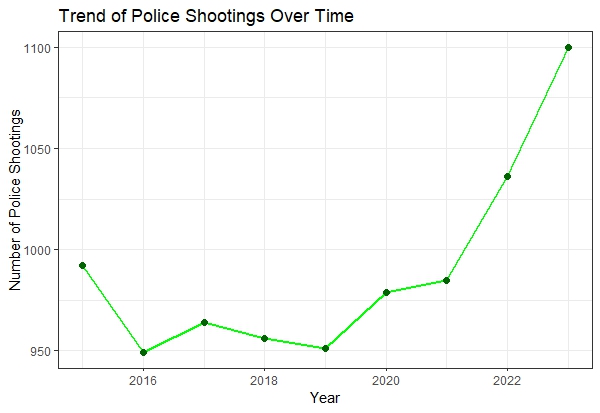
The implementation of body-worn cameras appears to have limited impact, though it’s important to acknowledge potential delays between policy implementation and observable outcomes.
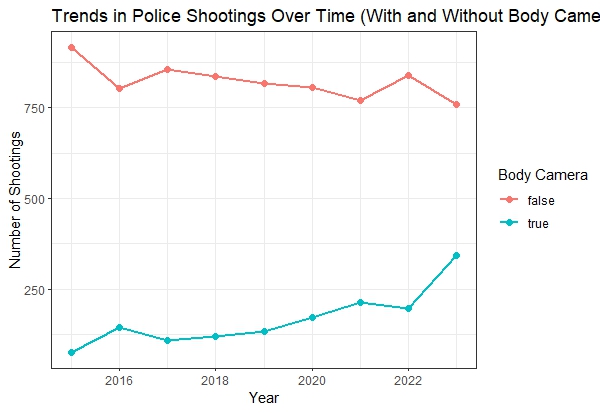
Particularly concerning is the fact that body cameras were present in only one-third of documented cases.
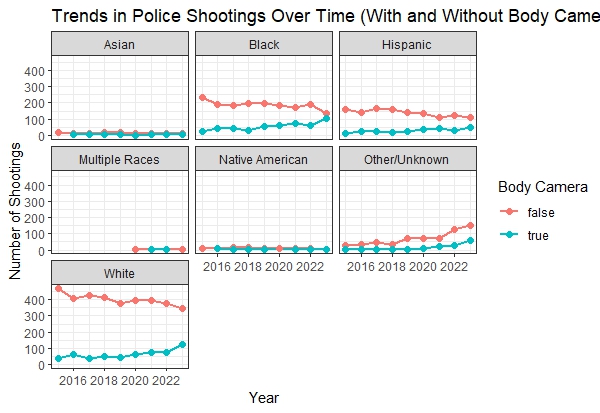
When analyzing body camera usage across racial categories, while overall utilization shows an increasing trend, the data suggests a concerning pattern: incidents involving body cameras correlate with decreased likelihood of racial identification in victim documentation.
Conclusion
While numerous aspects of this issue warrant further investigation, certain data points remain unavailable – notably, comprehensive information about all police interactions, as this dataset exclusively covers fatal encounters.
Nevertheless, the loss of 10,000 lives over a decade, through police shootings, represents an alarming figure, particularly considering that 20% of victims displayed signs of mental illness, and roughly half were not attempting to flee.
This analysis, while revealing, highlights the need for more comprehensive research and complete datasets to fully understand and address these critical issues.